Showing posts with label world of ideas. Show all posts

Aug 14, 2020

The Relation Between Radicals, Moderates, and Conservatives

 NYT columnist David Brooks explains, in this OpEd,  that the "radicals" don't bring change; it's the moderates that do.

What is it that makes a person "conservative"? I think it's personality, it's the go-to, default, setting for the individual. Brooks has been a conservative, and as he says in his piece, over the years he moved right on certain issues that are more emotional (family, country, etc), and moved left on issues that can be rationally analyzed, like social programs, justice, etc.   For the same reason I don't like religion, I don't like conservatives..... and, I came to this by thinking and learning. The more I did the more ..radical I became in opposing conservatism and religion. They're both go hand in hand, most of the time, and they both want to hold progress back. By progress I mean positive change, not destructive radicalism.

B
rooks says, " The people who come in their wake and actually make change are conservative radicals. They believe in many of the radicals’ goals, but know how to work within the democratic framework to achieve them."  He calls "radicals" those who aren't really radicals but are more vocal advocating for a sensible, more just society--which is already in place elsewhere. That's not ..radicalism, unless you compare it to a big mass in the US that is very conservative.  In this sense it's the ..perceived moderates (like Biden) or the "conservative radicals" as Brooks labels them, that facilitate change, because of the big mass who's afraid of "socialism".  But, yes, the envelope has to be pushed by the radicals in order for the moderates to have a chance of implementing reform.

Voting by itself is not enough. Activism and movements are necessary to stir up the status quo and usher new choices. These assaults on the status quo may be seen inconvenient or even threatening to many Americans, but they're important in accelerating change.

May 1, 2015

Intellectual Honesty and Our Defective Politics

As I'm writing this, May day celebrations and demonstrations are taking place in many countries, where millions of people are basically asking for a better life. Now, of course the definition of a better life is not agreed upon--especially when it involves very different cultures--but, yet, there are common desires, like to have a long, healthy life, economic opportunity that leads to meeting human needs, freedom from oppression, choice, etc. The good life is desirable.

When we disagree about something, at least we have to agree on what we're actually talking about. Agree on reality first, before we evaluate the arguments for and against. It's OK for people to have different values and priorities. For me, for example, leisure and individual liberty is more valuable and a higher priority than money and material possessions. Although, I do need money and possessions to have a good life. This is true for everyone, even if the threshold varies depending on time, place, and subjective conditions.

Paul Krugman writes in this New York Times editorial that intellectual integrity matters; acknowledging mistakes, and having an open mind. Wanting to know the truth, the facts, should be a priority, but it isn't--not in the political, not in the economic, and even in the personal universes. Indeed, people get comfortable with an idea, a situation, an image, and then resort to confirmation bias, which becomes an ordinary response that often isn't even noticed.

I normally don't republish long quoted articles, but this one by Krugman deserves a longer mention. Go to the NYT page to read in its entirety.

The 2016 campaign should be almost entirely about issues. The parties are far apart on everything from the environment to fiscal policy to health care, and history tells us that what politicians say during a campaign is a good guide to how they will govern.

Nonetheless, many in the news media will try to make the campaign about personalities and character instead. And character isn’t totally irrelevant. The next president will surely encounter issues that aren’t currently on anyone’s agenda, so it matters how he or she is likely to react. But the character trait that will matter most isn’t one the press likes to focus on. In fact, it’s actively discouraged.

You see, you shouldn’t care whether a candidate is someone you’d like to have a beer with. Nor should you care about politicians’ sex lives, or even their spending habits unless they involve clear corruption. No, what you should really look for, in a world that keeps throwing nasty surprises at us, is intellectual integrity: the willingness to face facts even if they’re at odds with one’s preconceptions, the willingness to admit mistakes and change course.
And that’s a virtue in very short supply.
 ....
Times like these call for a combination of open-mindedness — willingness to entertain different ideas — and determination to do the best you can. As Franklin Roosevelt put it in a celebrated speech, “The country demands bold, persistent experimentation. It is common sense to take a method and try it: If it fails, admit it frankly and try another. But above all, try something.”
What we see instead in many public figures is, however, the behavior George Orwell described in one of his essays: “Believing things which we know to be untrue, and then, when we are finally proved wrong, impudently twisting the facts so as to show that we were right.” ......

Just to be clear, I’m not calling for an end to ideology in politics, because that’s impossible. Everyone has an ideology, a view about how the world does and should work. Indeed, the most reckless and dangerous ideologues are often those who imagine themselves ideology-free ....

The press, I’m sorry to say, tends to punish open-mindedness, because gotcha journalism is easier and safer than policy analysis. Hillary Clinton supported trade agreements in the 1990s, but now she’s critical. It’s a flip-flop! Or, possibly, a case of learning from experience, which is something we should praise, not deride.

So what’s the state of intellectual integrity at this point in the election cycle? Pretty bad, at least on the Republican side of the field. Jeb Bush, for example, has declared that “I’m my own man” on foreign policy, but the list of advisers circulated by his aides included the likes of Paul Wolfowitz, who predicted that Iraqis would welcome us as liberators, and shows no signs of having learned from the blood bath that actually took place.

Meanwhile, as far as I can tell no important Republican figure has admitted that none of the terrible consequences that were supposed to follow health reform — mass cancellation of existing policies, soaring premiums, job destruction — has actually happened.

The point is that we’re not just talking about being wrong on specific policy questions. We’re talking about never admitting error, and never revising one’s views. Never being able to say that you were wrong is a serious character flaw even if the consequences of that refusal to admit error fall only on a few people. But moral cowardice should be outright disqualifying in anyone seeking high office.

Think about it. Suppose, as is all too possible, that the next president ends up confronting some kind of crisis — economic, environmental, foreign — undreamed of in his or her current political philosophy. We really, really don’t want the job of responding to that crisis dictated by someone who still can’t bring himself to admit that invading Iraq was a disaster but health reform wasn’t.

I still think this election should turn almost entirely on the issues. But if we must talk about character, let’s talk about what matters, namely intellectual integrity.

Mar 18, 2011

Stephen Fry Articulately Explains the Difference Between Revealed and Acquired Truth. A Renaissance Person in Deliberation!

There is a fundamental difference between a progressive person and another one who's satisfied with revealed "truth." The philosopher Immanuel Kant asked, do you believe in something because it makes you feel good or because it's true. He was an enlightened individual among those who tried to lift humankind out of self-imposed immaturity. The Age of Reason, the Renaissance was a truly revolutionary wave that changed the world. Liberalism won--at least in the west--over the Old Regime whose attributes were (still are in some places): religious conformity, ascribed status, and absolutism.

Absolutism is connected to religion and its self-proclaimed truth through revelation. Now, think about his for a moment. Why should God want to reveal his truth to the few? If it's about knowledge then it should be accessible to everyone not to the chosen few. And, not only it should be accessible but it should be open to discussion, and, if necessary, revision. Show me, explain it, not dictate-it-and-of-discussion take-it-or-leave-it proposition.

Stephen Fry is brilliant. He typifies an enlightened person--one who reasons, inquires, revises, and quests for knowledge. In this video, he explains the difference between acquired and revealed truth. What a delightful speaker he is too.


Nov 17, 2009

The Meaning of Education and the Timidity of Certain Minds

What is that You Want to Know?

It doesn't happen that often--maybe because students don't care to say anything about it--but occasionally someone in class would argue that some comments/discussions about certain belief systems are offensive and disrespectful. The other day, a student said, "I don't pay thousands of dollars to have my beliefs insulted." Presumably she meant that certain topics should be off limits because she's uncomfortable with anything that may undermine her sacred beliefs. She pays thousands of dollars to get an education--in my opinion, education means more than vocational skills--but is she interested in paying for an education that sharpens critical skills? How about, the value of arriving at a conclusion after examining the facts and weighing the validity of the arguments?

The piece of paper a university awards should mean that the title holder has critical skills, can analyze, can amend, construct reasonable arguments, connect the relevant dots, and, yes, maintain a curious mind. How about learning something that may be outside one's comfort zone? Is this valuable?

Now, on the question of respect. As a principle it's a good one: respect every individual's human dignity; respect their rights; respect their claims to own conscience and opinion. But, why should their beliefs be granted automatic respect? Yet, denying automatic respect to a point of view does not mean people don't have the right to have whatever opinion they deem appropriate or their right to express it. Simply put, I do not recognize any right of de facto respect. Opinions, theories, belief systems should be evaluated on their merits. How can anyone demand that such be afforded sacred status? What's sacred for me may be laughable to you, and I'm OK with that! So, should you!

To take it a step further, if you claim sanctity for your beliefs, it may be an indication of weakness. Instead of having the force of arguments to defend your views, you rely on censorship for protection. I realize that many people don't want to be challenged so they seek supporting views only. Of course, this is their right. Of course, it's their right to feel any way they want. They can create filters and avoid places that present challenges. However, they should be prepared to have their views tested when they enter an institution where intellectual pursuits involve critical examination of ideas and beliefs.

How do we know things? Seriously, how do we know if something is true & valid? Maybe I should ask instead, do we care to know?

If we do, then the scientific method is the best tool we have to understand and accumulate precious knowledge! This involves open discussion, challenges, reason, evidence, review, and a way to amend.

I'm naturally suspicious of claims of divine revelation. I don't think profound knowledge or truths should be revealed only in secret and to a very few people. Especially when such statements can't be put to a test or subject it to an intellectual challenge. As someone claims the right not to be offended, I claim the right to free speech and rational thought. Above all, I claim the right to be human!

And, that's my theory!


Sep 28, 2009

What's a Fulfilling Life In a Desirable Society?

When the only form of government known was one of either absolute or authoritarian flavor, then it was natural to think of it as a threat to liberty. Even in liberal democracies today, the government can reach too far--as we saw under the 8 years of the Bush administration. They've been advances in thinking and in practice when it comes to organizing a civil society, but the question remains: what is the purpose of government? Different people in different times have given different answers to this. Assuming that our government exists for the benefit of most citizens, then the question is: how much power to give government and what is it that we are trying to achieve when you say "for the benefit of many"?

Certain ideological rigidity prevents some of our bright fellows from seeing the necessity for reforming a broken system--like broken laws or an operating system that's full of viruses. We have the greatest percentage of educated people ever; much of it is the result of public education. In the last 100 years, we've doubled human longevity. Advances in medicine and technology have transformed our society. Yet, some of us seem to be clinging to old ways that don't serve us well in this 21st century. Understandably, modernity may be perceived as a threat to the "old, tried & true," and it's poses great challenges to traditions and ancient belief systems. I'm not arguing for replacing everything old, but let's not be conservatives because of disposition.

We have to revisit old beliefs and re-examine our ways of life. Building a sense of self-confidence--a requirement for unforced change--takes time, effort and a keen understanding of what's going on around us. We have to give up our collective illusions and scrap the myths that were meant for traditional societies where the notion of commnonwealth didn't really exist.

Let's start by thinking the notions of liberty and equality. What do they mean to you? How do they fit in your idea of a good society? Do you have a definition of a good life?

Aug 31, 2009

An Abbreviated History (part 2). The Power of Myths & Ideas

Why Do People Believe Crazy Stuff?

[continued from an earlier post, Abbreviated History]


Are you ready to celebrate the 40th anniversary of the "Guide of the First of September Great Revolution of the Socialist People's Libyan Arab Jamahiriya"? No? Well, it's all right, but Colonel Qaddafi, like the Pope, rely on lots of people to buy his message.The Soviet Union had a brutal regime, yet it had lots of sympathizers, many in the West! Another brutal regime in theocratic Iran relies on violence & suppression and on a large mass of Iranians who see modernity and the liberal democracies as evil.

Any benevolent supreme ruler would tell you that his people don't know what's in their best interest so he decides for them. Any ruthless leader would also use threats and violence to make people behave. Do as I say or I you'll experience hell--in this life or ..later. Sounds familiar? Both types of leaders don't trust their flock. They establish a system whereas sheepish behavior and obedience is encouraged.

But how do people get certain ideas? Well, it varies. Parents, at first, schools, and society at large imbue everyone with ideas and concepts. Many ideas become part of a person's identity and they are not revisited, never to be changed. Obviously, some ideas are good some are bad. Some are useful some are against the individual's own interest and against the interest of the majority of society. Yet, they persist!

Culture provides society with a value system, a way of doing things, stability of custom, and, guess what, notions of preserving the status quo. The masses used to be rather ignorant and in the absence of education, open dialogue, and freedom, they followed the "tried & true." Conservatism is no accident. It's a disposition based on perceptions deeply implanted in the human mind. The power of ideas, of myths, of belief systems, is immense. More so, if you don't have the means to critically evaluate them. Besides, it takes effort to blaze your own trails. Fear of the unknown or the incomprehensible is unsettling. Uncertainty is for the brave. Responsibility is for the strong. Inquiry for the curious. Reality is for those who can handle the truth.

Imagine that you believe you'll be super-rich tomorrow. Or, that you'll die of an evil spell cast on you. Or, that by strapping explosives on your body and detonating them in a crowded place, you're actually doing God's work. Or, that those who have another faith, nationality, color, whatever, are not worth anything but the worst treatment. You get the picture. Your actions will be based on those beliefs.

History can be seen as a clash of civilizations and ideas (belief systems). Humankind has raised hell on earth because of the power of myths that reached a critical mass of people who accepted them. There's always an excuse for embarking on a destruction of another civilization, culture, peoples. And, it doesn't have to make lot of sense. The key is to accept the first premise.

F
or example, you may accept the premise that you exist in a lovely building that was made for the chosen ones. The first step is crucial. Once a "foundation" belief is embedded in your brain, then the rest of assumptions and actions can be reasonable. Sure, you can imagine such a building needing several rooms for specific purposes, beautiful furnishings, and ambient music! You can argue that a sun room should face south--a good choice! Then you can argue that all the residents must please the landlord of this building so he won't throw you out of punish you--a rational choice; no one wants to be evicted, right?

Another interesting fact is that the human brain is capable of holding several contradictory ideas at the same time. Logical inconsistencies exist in all of us. The difference is what do you do when you discover one? Can you amend your views? Or, like in US politics, you can never appear as someone who admits he was wrong and changed his mind? Consistency at the expense of accuracy! Also--and this is important--can you question something that millions of people for thousands of years believe as true? Suppose such a belief is given to you as part of your identity. What do you do, how do you approach this?.. Can you even touch the subject with a critical mind?

Without singling our Catholics, why do many believe the Pope is infallible in matters of dogma? Why do they follow his edicts? Over the millennia, Popes have reversed their predecessors. What does this imply? Why there wasn't much of criticism when the current Pope declared that even AIDS (and other sexually-transmitted diseases) is bad, condoms are worse! Seriously, people will die because of such a stupid statement--translated into policy. Has anyone pointed out this contradiction: Thou shall not kill, one Commandment instructs us. But, married men who have AIDS can transmit a death sentence to their wives because condoms are not to be used under any circumstances!

Do you remember the Bill Moyers-Joseph Campbell series on the Power of Myth back in the 1980s? That got me interested in the power of ideas and how peoples' behavior is based on their ideologies. [By the way, Moyers has a great resource on Faith & Reason on the PBS site] What I find discouraging is that in this 21st century, at least in the so-called advanced countries, there should be lots fewer ignorant people. I wouldn't be surprised if Qaddafi still commands a majority support from Libyans, for the latter don't know any better and can't entertain any alternatives to the former. But, in the US there shouldn't be so many kooks, charlatans, con artists, and b.s. dispensers. They would all be irrelevant if there was no critical mass supporting them.

How come the largest Catholic country, Brazil, didn't rise in disgust to the latest official stance of the Catholic Church (in Brazil and the Vatican) when a man who raped his 9 year old step daughter and got her pregnant didn't earn excommunication but her mother and the doctor who performed the abortion did?.. It's the same scenario where a critical mass of people support genital mutilation, keeping women as chattel [term derived from cattle], and silencing any free expression.

Our political discourse would have been much better. The current health reform "debate" would've been more reasonable. But, how do you communicate with someone who doesn't want reform because he doesn't like Obama turning this country into a socialist/communist one?! In a democracy the people have to be convinced to vote against their own interests.... especially those who could afford it the least!

....

PS>You may want to click on the first picture to get it to open bigger so you can read about the norms of the American society of our parents. I can't vouch for the content authenticity, but I can tell you it's accurate in its essense. I'm old enough to have met people who were adults in the 1940s, 50s, and 60s, and even women accepted those traditional roles. I'm glad there's been progress but not as fast as I'd like. Yet, even in the last 15-20 years, there's been serious change. There's support for repealing the "don't ask, don't tell policy"; several states are legalizing same-sex marriage; we elected a black man to the presidency; and we may do away with a conservative party fit for the Dark Ages. For an advanced industrialized country it's a shame that we have so much violence, so many people in prisons, so much religiocity, no universal health care, and such a huge gap of wealth between the elites and the rest of society.


Feb 28, 2009

An Argument in Defense of Blasphemy. [and a comment on the UN blasphemy resolution]


There are many things that offend me. High on my list is obligatory superstition and ignorance forced upon us, as well as violations of human rights & fundamental freedoms! On the other hand, I admit, I do like the occasional blasphemy routine (who doesn’t?), because it has a liberating effect on me. That’s right, it feels good to have the right to free expression! Even though, many things offend me, I support the conditions that ultimately make me happy. Such conditions allow others who disagree with my views and life style to pursue their own self-defined bliss. I can deal with offensive expressions by maintaining my personal choices and taste.

Boycotting, choosing not to, or ignoring something is not the same as legally banning it. I prefer not to be offended, but if it happens, I shouldn’t have the legal right to remain non-offended. This is easy to understand why: there’s isn’t anything under the sun that can’t be offensive to someone somewhere.

Morality, in its most basic application, is how we treat others in a civil society where a plurality exists. The conditions that support civil rights & constitutional liberal democracy are the most suited for enlightened, progressive human beings. A personal definition of fulfillment & purpose is appropriate for every thinking, mature individual. Free expression is in the core of such definition.

If you are a confident person you probably don't think that ideas (or expressions) are toxic, because you can handle them. Correct? Bad taste, stupidity, purposeful ignorance, prejudice, etc, can all be dismissed by the rational and confident mind. You probably worry that it is your fellow citizens who aren't equipped to handle such expression, and therefore you want to protect them by banning offensive material. Right?

Wrong! People have to grow up and deal with life and the real world--even if this means being offended here and there. Keeping people insulated in a web of mind control is not good. It results in ignorance, extremism, lack of confidence to deal with a crisis, and, obviously, authoritarian practices by small elites--benevolent dictators. We are better than that.

Besides, who is the best judge of what's offensive to me? Should I say, I don't want to be offended.. Should I elevate this to a legal right? What do you think?

When I was very young, I saw the American flag being burnt in protest by veterans of the Vietnam war. I was offended. I hadn't separated the material of the flag with what the flag represents. Just as I was offended when my religion was being attacked as a myth. Yes, once I believed in Zeus, Santa Claus, Superman, and the Tooth Fairy. I grew up since. Today, I'm offended mainly by actions that attempt to limit the conditions of freedom--including banning free speech. Being challenged on my core beliefs back then resulted in re-examining those long-held beliefs. I'm better for it. This has been another liberating experience for me. I mean, it's a relief not to have to worry about offending the big man in the sky. My dress code, eating patterns, sex, and how I relate to others, all improved after this discovery.

I do support blasphemy. I support it because I want to offend t
hose who don't want free-thinkers around. And, I want to fight for liberty, including the liberty of those who oppose free expression; though I oppose their plans to gag the rest of us into submission.

By now you've probably heard about the UN General Assembly's resolution to ban "defamatory" speech against Islam and religion in general. If this is not a defamation of liberty & free expression I don't know what it is! It's not just the Islamic countries that are pushing this, mind you. They have many Christian sympathizers, because most of the Church hierarchy does not care to defend free thought & expression; it wants more religion! I bet many western Churches dream longingly of the European theocracies of the past! The Archbishop of Canterbury, for example, favors Sharia law in the Muslim communities in Britain!!! Sharia law in a constitutional liberal democracy??!! Well, that's really offensive!

Germany shares a big slice of the blame here. It's illegal in that country to deny the Jewish holocaust--an offense that can land you 3 years in jail. Obviously, only ignorant persons or Nazi-sympathizers deny the holocaust, but those bigots should have a right to their own propaganda and indoctrination, even if they're 100% wrong and offensive to the rest of us. As others have the right to make up and believe in their own myths, like winged horses, virgin births, walking through walls, warlords from outer space, and the earth resting on a giant tortoise.


After all, there are many types of deniers out there, like those who deny the notion that Zeus is the God of all gods. I suppose this is fine, because only a handful of people follow the ancient Hellenic religion today, right? There are others, though, who make extraordinary claims without offering any proof while their claims could not stand against rudimentary logic. What's really crazy it's the view that irrational & superstitious beliefs deserve an absolute protection from blasphemy. I'd say, {it is precisely those beliefs that we must offend}, and offend with impunity!


Maybe this way, sometime soon, we can reclaim our humanity from those who want to impede our species' intellectual progress and self-fulfillment.
[Here's an older post written at the time of the Danish cartoon controversy. Who's afraid of offensive speech?]


PS>The Universal Declaration of Human Rights, which has been signed by most UN members, should be re-read by those who seek to limit free expression. From the UDHR:

Article 19

Everyone has the right to freedom of opinion and expression; this right includes freedom to hold opinions without interference and to seek, receive and impart information and ideas through any media and regardless of frontiers.

Oct 18, 2007

From a State of Nature to an Enlightened Society: Democracy Won't Survive if the People Aren't Involved. Let's Put our Ideas into Good Use!

part 2/2

Ideas are very powerful because they help form beliefs and motivate people to action. So, it's not a fruitless exercise to think, re-think, revise, and learn by observation. It's good and necessary! However, this activity takes a bit of courage since it may uncover truths that could make you uncomfortable. Once I asked myself whether my need to know is greater than my fears. The answer was, if there's something I should know, then I do want to know. Granted, we often don't have all the facts, but that's life. We make decisions using the best available data and by employing logic. How good our data and our logic are impacts the outcome. But that's why it's very important to keep the dialogue going. A strong theory is one that leaves room for amendment. Closed, de-facto, divine, or absolute theories are just baseless opinions, and not theories in the scientific sense.

Our world is a complex one, fast-moving, and ever-changing. Change for the sake of change is a foolish thing, but progressive change is necessary. A true conservative is a traditionalist who prefers the "true & tried" to the unknown. The resistance to the pace of modernity may be due to his inability to make sense of the new quickly enough. The sense of identity rooted in the past is being challenged by modernity and, yes, cosmopolitanism. Being "special" means to have some kind of exclusivity, and thus humans have shun others--especially those who believe in other gods, dress, speak, behave differently. Traditional culture to a great extend is repetition. Nationalism is similar to providing exclusivity and special status. An offshoot of this is nativism--which has been present as long as immigration to this country.

Liberals tend to be persons who welcome and can cope with change. They're more likely to be risk-takers, more tolerant, inquisitive, to explore what's beyond the horizon, and use a rational approach. Progressives always looks to improve society. We accept the scientific inquiry and the scientific method. Most of us like the ideas of Locke, Kant, Mill, et al, but we don't accept dogma and absolutism. In present-day US politics, we have to be partisan as the Republican party with its neo-cons, prudes, religious fanatics, authoritarians, anti-science (and proud of) views, power-grabbers, and non-democrats, is beyond hope.

A liberal democracy offers th
e best chance for the individual to reach self-fulfillment because of the rights it confers upon every person and for the opportunities if affords. Democracy cannot exist without the demos (the people) and without opportunity! Regrettably, we are in danger of losing our grasp on the political system that has made our country great. When others were struggling with authoritarian, backward systems, the US was pushing ahead. We had the best of the three Tees! Technology, Talent, and Tolerance. We're not as good as we used to be, at least not in relative terms vis-a-vi the rest of the world.

The Gilded Age has return and the income (wealth) inequality is as great as it was some 100 years ago. The stock market is going up but real wages have stagnated since the 1970s. We have to ask, what's the benefit of having such a huge economy that produces so much wealth if the distribution of wealth is absurd! Wealth is being accumulated by the very tiny elite at the very top. I think this is not healthy for a society, nor do I think it's good business. We know that power & wealth are closely related.

If the American middle class doesn't receive most of the wealth, power will also accumulate to the very top of the economic elites. And, all socio-economic elites want more and use their means to that effect. This situation is not good for us. Unless we act today, it may be too late tomorrow, or, it we may have to go through a traumatic shock.

Being rewarded for one's efforts is a moral
thing--I agree with Adam Smith on this. But, no one achieves everything by himself. He usually stands on the shoulders of others. The self-made successful business people depend on the resources & the conditions that exist. They do not operate in the vacuum of space! Public transportation, educated work force, police, fire, EMT, the armed forces, and the law that secures their property are some of the benefits this country provides.

What should the benefits be for being a member of such a rich country? Is health care, for example, a right or a privilege? And--if I may push it a bit further--we can't analyze everything on a profit basis. Certain things aren't supposed to be profitable, like public libraries, national parks, etc. But, they are necessary for the quality of our lives.

Unless the majority of Americans start to pay more attention to what's going on, and are willing to participate in the affairs of our country, then the situation is going to get worse. This is an investment all of us should make. I think many Americans haven't realized this as yet. They sense that it's a good thing to live in this country--and it i
s! But, this is not enough, nor it's the result of divine order. It took many years of effort and leadership. The genius of the Founders was this: to create a system that allowed popular participation, minority rights, separation of church-state, economic opportunity, and it provided a way to amend it as the country moved through the centuries.

I don't believe our democracy will continue to function if we're to rest upon the achievements of the past and the occasional wise leadership that may come along. I think people's participation is necessary today more than ever. But, the people have to know enough to make reasonable decisions. We can't afford leaders like Bush any more--not in the highest leadership offices of the land anyway. We don't have another grace period; we have to hit the ground running.

I'm an optimist, but also a realist. I know that for all the hoopla, the necessity for reversing the present disastrous course, and the excitement of electing the next leader of the free world, etc, only a small percentage of US citizens will show up to vote in the months to come. How small you ask? Well, in our first contest in Iowa, only 6 to 10% of eligible voters will vote!

Americans may dislike their politics, they may find the political process unappealing, and definitely complicated. On the other hand, they still believe that "we're number one!" In the past, we looked around the world and we compared favorably. But, look how the world has changed since. Even totally destroyed countries (Germany, Japan) have rebounded.

I think the dissatisfaction hasn't reached the tipping point yet. It may come sooner than later and it may produce another wave that will bring a new New Deal. The "great middle"--the middle class ever so important to a stability of a country--is not gaining as much as the corporations. Now the latter are not only getting exceedingly preferential treatment but are increasingly capturing our government! Public services--once thought to be a main reason to have a government--are disappearing, being outsourced to corporations whose main concern (and obligation) is to make money, often by denying services! [such as the case with the health insurance companies]

We're privatizing our own government. Profit is good. Wealth is desirable. However, we have to create & maintain conditions for a good life; to keep a country where a progressive culture of life prevails. Creating wealth has to be done smartly not with savagery. For example, if you're in the business of logging in a competitive unregulated environment, then you cut down the last remaining tree standing! In the end, you're out of business (if rich) and all of us suffer. There's got to be a sane, more practical way than this approach.

Who's to care for the commonwealth then? If not the citizens, who? There's no one else but us.... Benevolent dictators are no more; hopefully, we've matured
enough to assume responsibility for ourselves; to confer high offices to capable leaders who won't stroke our passions but motivate us to make the world a better place to live in. We cannot afford not to be people of the Enlightenment.

Oct 11, 2007

An Obscure Question: Is this an Age of Englightment, or an Enlightning Age? [or, are philosophical meanderings totally boring & impractical?]

Part 1

Yes, I know, most of the visitors to this blog today just said, "I'll be back later," after reading this post's title! it's OK, I still want to talk about ideas and their practical necessity in our world. Certainly, it's a good exercise to ponder ideas, to think in the abstract and connect the imaginary dots. On the other hand, I find that the world of ideas (hence, philosophy) is a very powerful one. Haven't humans done beautiful and horrible acts alike because of ideas? Often, it doesn't matter if an impression or an idea is based on fact or fiction, it gives a reason for action. It justifies, pacifies, soothes, excites, and provides a sense of identity.

The clash between the ancient religion and Christianity was inevitable [photo from the Agora in Athens with a byzantine church in the foreground]

The values we hold are based on ideas too! Culture evolved because of certain concepts about life and the perceived necessary conditions for human survival. God originated as an idea, and religion was the result of what people thought [most people were told and believed as de facto] of the practical application of the divine.

Faith provided a path to salvation and physical immortality. Unfortunately, religious ideas haven't been very compatible with each other and frequently they operated in a zero-sum game, where it was believed that the survival of one meant the death of the other. So, for much of human history religion played an important role in war and the reasons for going to war.

I'm not concerned with the supernatural [not today in this post anyway] but with how a range of philosophical observations help explain and challenge human behavior. Philosophy becomes very real and applicable when an empirical approach is used. You observe, analyze, form conclusions & theories, and revise as necessary. It's a rather scientific approach. I like that. It's a great medium for humans to evolve upon. The challenging part is also very important, because it can provide fresh ideas and methods of improvement. But, I think only enlightened persons who value inquiry and are brave enough to face reality are comfortable with such a challenge.

The good news is that this elite club doesn't have membership fees, nor other requirements except an open, skeptical, deliberate mind--oh, and probably an interest for such exercises of the mind. With all the amenities and the benefits of a modern society, life isn't always easy, time & energy are limited, and our focus can wane into the trivial.

Jeremy Bentham a "philosophical radical" [radical during his time] said that humans have two masters: pleasure and pain, and, therefore, behave accordingly. These two "masters" can be used as a guideline for human interaction and for deciding on the role of government. He said, government should have the purpose of promoting the greatest good for the greatest number of people. Although, there are those who seek pain either for ..satisfaction or as a required means to an end, most people do prefer pleasure. Thus, a logical question would be, what is pleasure?

One of my favorite philosophers, John Stuart Mill, said it should be the individual who decides what constitutes pleasure; the same individual should be free to construct his own path to personal fulfillment. Mill put forth the Harm principle--which is very useful in deciding matters of privacy and public interest. The only acceptable reason for society to control individual behavior is to prevent harm to others. The individual's own good--either moral or physical--is not a sufficient warrant! This, of course, applies to people who are mature adults, not to children or to ..barbarians. In short, there's a personal definition of pleasure! In order to have that, rights of privacy are imperative.

We are who we are because of the environment we grow up in, our own effor
ts to enrich ourselves, accidental circumstances (luck), and availability of time & space to be ourselves. If the conditions of freedom and privacy change, then human character changes. I believe a liberal democracy offers the best possible conditions for the individual to fulfill his own potential. If this country is about property rights, let's not forget that you should own & be in charge of yourself.


But, shouldn't the light of reason prevail? As Immanuel Kant once asked, is this an age of enlightenment or an enlightening age? It's probably the latter. If we are to look around the world today many humans are hell-bent on total annihilation and destruction of reason and anything else that stands between them and their utopias. For a species, we are young and still primitive--although we have taken huge leaps of progress and we do have the greatest potential. If we allow ourselves to evolve that is.
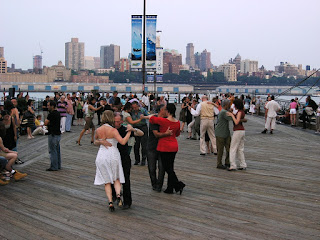
One important act of maturity--or, in the process of getting there--is acting. Yes, observing and experiencing life can have a maturing effect, but taking the initiative and making choices is vital. A person should be an actor, not just part of a passive audience. That's why the conditions that foster freedom must be maintained, for freedom in this sense is a practical necessity!

We are creatures of convenience. Why not! But, there are a few things worth spending some time & effort on. Right? Convenience and laziness aren't identical. Thinking--critical and deliberate--is one worthwhile activity I reckon. Making decisions and assuming responsibility is hard too. At times we all want to regress to being children so we don't have to deal with life's adversities and demands. This is not a mature approach though. Sadly, too many modern humans are quite happy to remain in perpetual immaturity and let others make the decisions for them; it's much easier that way they reckon.

Those who have a choice, (usually those who live in a liberal democracy), have to answer a couple very important questions: Is it a worthwhile activity to lead an examined life? And, is it important to contribute a little bit to the conditions that foster human enlightenment?


[to be continued]